
Solar, Storage Account for 91% of New US Power Capacity in Q1 2026
2026-06-12 · Mercom India
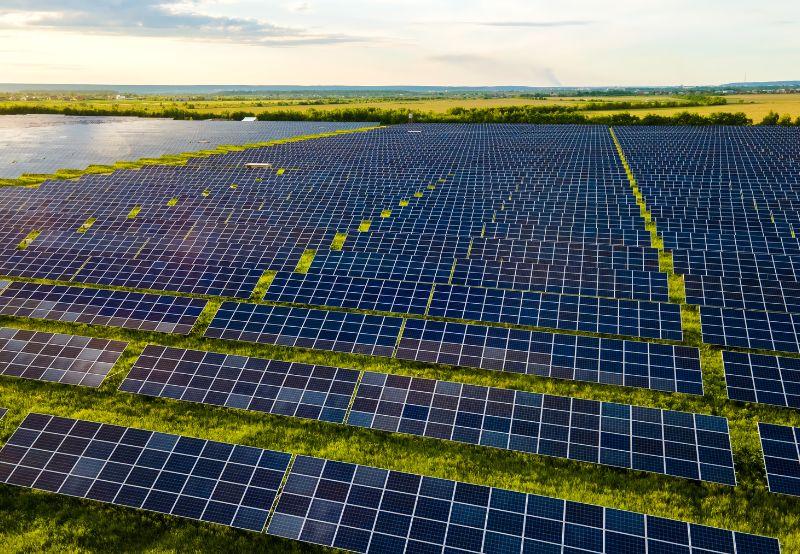
The U.S. added 7.8 GW of solar capacity in the first quarter
Follow Mercom India on WhatsApp for exclusive updates on clean energy news and insights
The U.S. solar industry installed 7.8 GW of capacity in the first quarter (Q1) of 2026, a 27% decline from Q1 2025 and a 42% decline from Q4 2025, according to a report by Wood Mackenzie and the Solar Energy Industries Association (SEIA).
Solar and storage accounted for 91% of all new electricity-generating capacity additions in the U.S. during the quarter, with solar contributing 60%.
As of 2025, the U.S. solar industry had over 200 GW of safe-harbored capacity supporting near-term installations as of
The report expects utility-scale pipelines of 216 GW to 240 GW from safe-harbored projects, which could sustain deployment through 2030 after accounting for attrition.
The U.S. Treasury Department and the Internal Revenue Service had issued partial guidance in February on the Prohibited Foreign Entity provisions under the One Big Beautiful Bill Act. The report said the industry expects full guidance in 2027, with further clarity before the July 4, 2026, safe harbor deadline unlikely. The uncertainty is significant for solar manufacturers, as multiple China-linked companies are reorganizing under U.S. ownership.
U.S.-manufactured solar modules catered to nearly 70% of 2025 solar installations. Module manufacturing in the U.S. expanded considerably, but solar cell manufacturing capacity was limited to 3 GW.
Domestic module producers continued to depend heavily on imported cells. Imports from India, Indonesia, Laos, Malaysia, Thailand, and Vietnam accounted for 78% of U.S. cell imports.
Last May, the United States International Trade Commission (USITC) voted to conclude that domestic solar module manufacturers suffered material injury from imports of crystalline silicon photovoltaic cells, whether or not assembled into modules, from four Southeast Asian countries.
In July, the Alliance for American Solar Manufacturing and Trade filed new anti-dumping and countervailing duty petitions with the USITC and the U.S. Department of Commerce against imports of crystalline silicon photovoltaic cells, whether or not assembled into modules, from India, Indonesia, and Laos.
Despite strong demand, U.S. solar additions are expected to remain flat and average 43 GW annually over the next five years because of challenges related to permitting, interconnection, equipment, trade, and tax credits, the report said.
The U.S. utility-scale solar segment added 5.9 GW of capacity in Q1 2026, down 34% year-over-year. Slower Q1 installations are expected to be offset by strong project execution and higher contracting activity, with most 2026 projects scheduled for commissioning in Q2 and Q4.
Read the full story on the original source. Open source article