
Sungrow Tests SG510HX Inverter Safety Systems at 4,200-Metre High-Altitude Solar Plant
2026-06-12 · Saur Energy
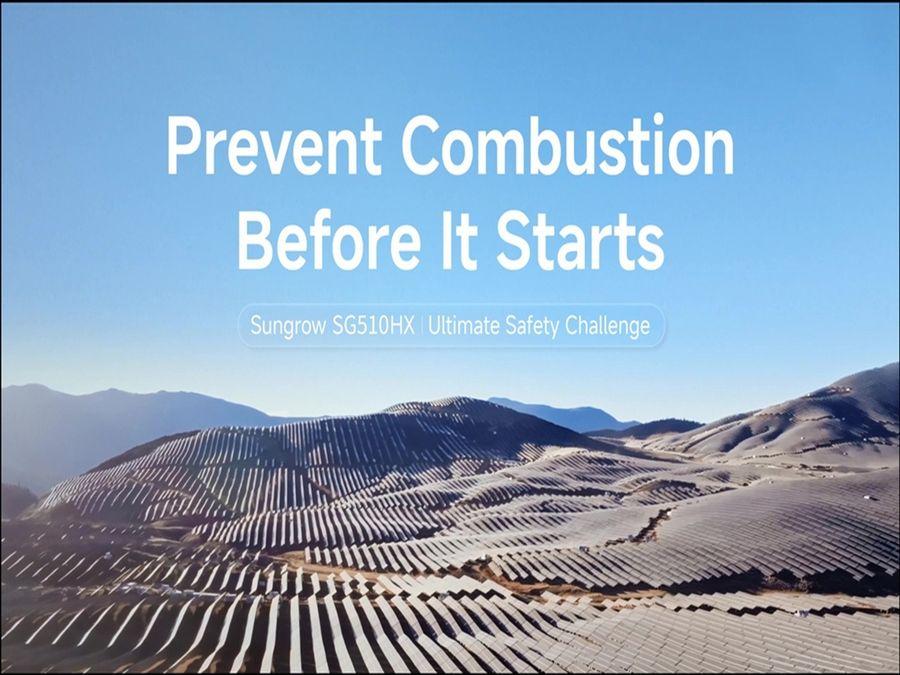
Sungrow Tests SG510HX Inverter Safety Systems at 4,200-Metre High-Altitude Solar Plant Photograph: (Sungrow)
Chinese inverter manufacturer Sungrow has announced that its SG510HX utility-scale string inverter successfully completed an extreme safety validation test at a photovoltaic (PV) plant located at an altitude of 4,200 metres. The test was designed to evaluate the inverter's operational limits and verify its ability to maintain safety and reliability under harsh environmental conditions.
The company said the trial assessed the inverter's response to critical DC-side fault scenarios, including reverse PV string connections, switch disconnection failures and lightning surges, all of which can potentially lead to equipment damage, plant shutdowns or fire incidents.
To address such risks, Sungrow has integrated an upgraded DC-side safety architecture comprising redundant shutdown mechanisms, temperature sensing and monitoring, and enhanced lightning protection systems.
According to the company, conventional inverter protection systems primarily rely on mechanical switches to interrupt fault currents. However, protection can be compromised if the switch itself fails.
Sungrow said its inverter incorporates a multi-layer protection architecture that combines primary and auxiliary mechanical switches with an electronic bypass. The main switch isolates DC-side faults within milliseconds, while the auxiliary switch can independently initiate rapid shutdown and conduct safety self-checks during startup.
In the event of simultaneous failure of both mechanical switches, the electronic bypass automatically creates a low-impedance path for fault current dissipation, preventing damage to system components.
During testing, engineers simulated reverse PV module connections and mechanical switch failures. Sungrow claimed that while conventional protection arrangements experienced significant backflow currents leading to overheating and ignition, the SG510HX's redundant protection system successfully diverted the fault current and prevented damage to both modules and the inverter.
The inverter also incorporates an intelligent locking mechanism designed to prevent accidental operation of safety switches.
Loose terminal connections and improper cable crimping can result in excessive heat generation, creating potential fire hazards in PV installations. Sungrow said the SG510HX uses embedded high-precision temperature sensors combined with real-time monitoring algorithms to identify abnormal temperature rises. The system issues warnings when irregularities are detected and automatically shuts down the inverter if temperatures remain above defined thresholds.
In one of the test scenarios, a deliberately loosened terminal connection triggered immediate temperature detection and automatic shutdown. The company said comparable systems lacking temperature monitoring failed to respond, resulting in overheating and fire propagation.
With extreme weather events
Read the full story on the original source. Open source article