
Extreme Weather Exposes Hidden Risks in Rooftop Solar Module Design: In-Depth Analysis
2026-06-12 · Mercom India
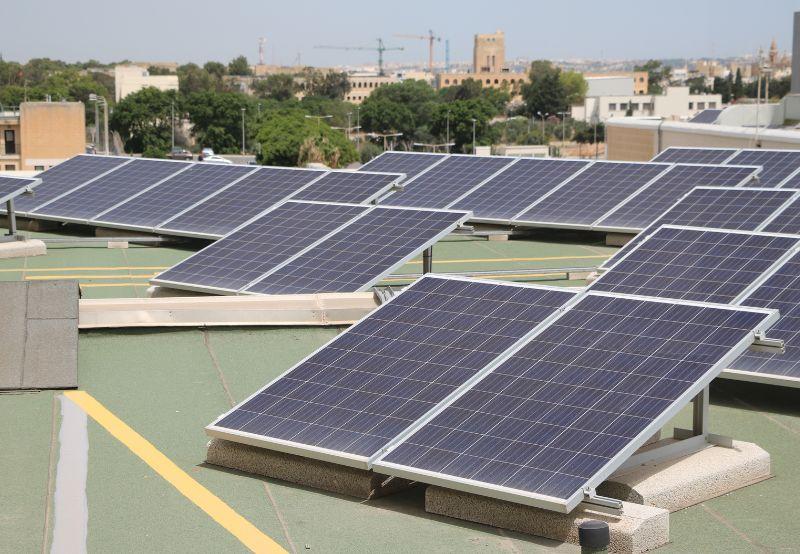
Industry experts point to module frame quality, structural design, and installation standards as critical to installation resilience in extreme weather
Follow Mercom India on WhatsApp for exclusive updates on clean energy news and insights
Recent extreme weather events in Rajasthan and other parts of the country have raised concerns about the structural durability of rooftop solar installations, with industry experts citing aluminum frames used in solar modules as a key vulnerability.
During high winds and storms, several solar modules have reportedly been bent, torn, or detached.
Experts say the failures are often linked to inadequate reinforcement at the module edges, where the frames cannot withstand high wind loads. These issues are not limited to Rajasthan; they have been observed in other states as well.
Quality Crisis at the Core of the Problem, Manufacturers Differ
Kamal Subhash Jolly, Managing Director at Anatoly Energy, said, “It’s not just limited to Rajasthan. It’s happening everywhere. The thickness of aluminum frames is reduced to ensure greater profits. There’s no framework to monitor quality.”
“The frames cannot withstand high winds and extreme weather conditions, and this leads to wear and tear of frames in a short span of time. This places an additional burden on us. As there is no warranty for frames, we must replace them, and it’s not the obligation of the panel manufacturer,” he said.
Jolly noted that these frames are often the point of failure, with modules experiencing bending, tearing, or even detachment during high winds and storms. The key issue is inadequate reinforcement at the module edges, which cannot withstand severe-weather forces.
Further concerns include the lack of comprehensive wind-pressure-strengthening reports, as structural engineers are not typically involved in assessing the wind resistance of solar modules.
The issue has highlighted the need for module manufacturers to focus not just on the size of module frames, but also on frame thickness, material quality, and overall structural strength. Installers believe that manufacturers are primarily pursuing cost-cutting, which has led to a gradual decline in the quality of module frames.
Uttam Patel, Director at H&H Aluminium, said, “One of the primary reasons behind the rising failure rates of solar modules is the cost-cutting undertaken by some panel manufacturers. Over the years, frame thickness has been reduced significantly, from around 1.6 mm earlier to nearly 1.2 mm in some cases. At the same time, module sizes have increased substantially, resulting in larger panels being supported by lighter frames. This combination can adversely affect the module’s structural integrity, particularly during transportation and under wind, mechanical, and thermal stresses, potentially leading to long-term reliability issues such as microcracks and reduced performance.”
Read the full story on the original source. Open source article