
Solar-Wind-Battery Hybrid Systems Can Meet Up to 90% of Electricity Demand
2026-06-03 · Mercom India
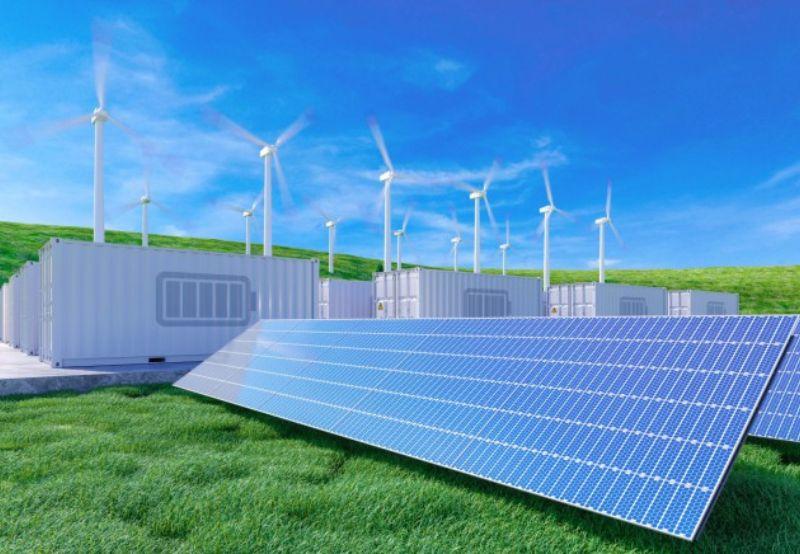
Energy storage can significantly reduce dependence on diesel generators for C&I consumers
Follow Mercom India on WhatsApp for exclusive updates on clean energy news and insights
As India’s solar market matures and policies increasingly mandate minimum storage requirements, the commercial and industrial (C&I) sector is steadily shifting toward solar-wind hybrid power projects integrated with battery energy storage systems to meet rising power demand, enable smarter energy dispatch, and support grid stability.
Industry experts estimate that hybrid renewable energy systems combined with storage can offset 85%-90% of a consumer’s total power requirements.
Rajasthan has mandated the integration of battery storage for green open access projects above 5 MW, with storage capacity equivalent to either two hours of generation or 5% of the project’s installed capacity.
Rahul Makahaniya, Chief Marketing Officer at Soleos Energy, said that while standalone solar projects can meet up to 50% of the consumer’s energy needs, and solar-plus-storage can offset up to 70%, integrated solar-wind-storage solutions can meet the majority of power demand.
He added that integrating battery storage into a 20 MW wind-solar project would cost around ₹11 million (~$114,850)/MWh.
Pratibha Sharma, Head of Sales and Marketing (North India) at Ningbo Deye New Energy, said energy storage can significantly reduce dependence on diesel generators for C&I consumers, where power generation costs typically range between ₹30 (~$0.31)/kWh to ₹40 (~$0.42)/kWh. According to Sharma, hybrid renewable systems can deliver payback within three years.
She also noted that storage systems can help offset peak-hour tariffs through demand-based dispatch strategies. Battery storage integrated with power conversion systems enables charging and discharging at optimized intervals, improving operational efficiency and energy management.
Under round-the-clock (RTC) renewable energy models, businesses with continuous power requirements can offset up to 99% of their electricity demand through renewable energy.
Significant Savings Through Rooftop Solar
Renewable energy adoption in the C&I segment is driven by the need to reduce electricity costs, comply with sustainability mandates, and meet supply chain requirements that are increasingly linked to low-carbon operations.
Read the full story on the original source. Open source article